

Your shopping cart is currently empty.
Free EmbroideryClick Here
FREE shipping on orders over $249*

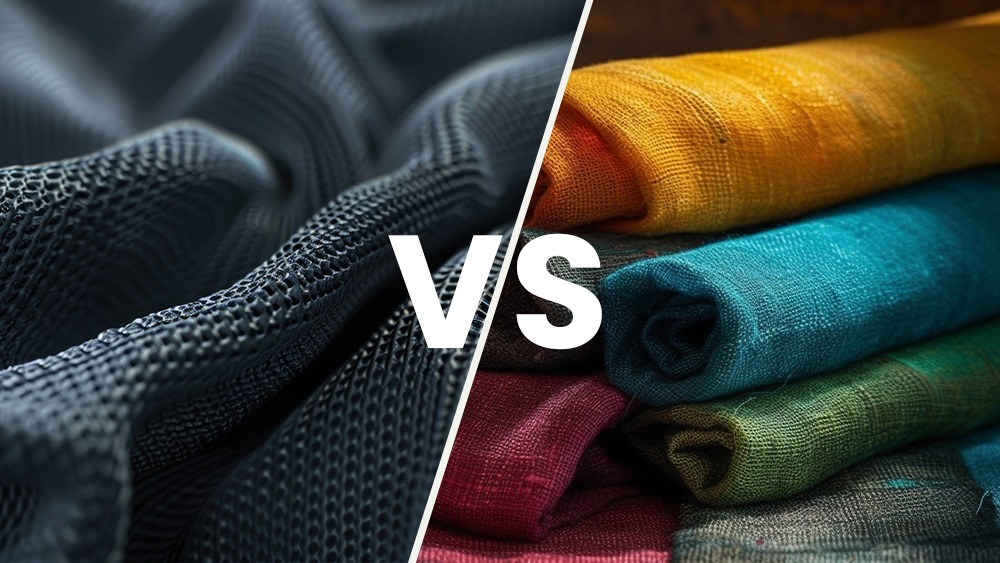
One drop of sweat narrates a large tale now more than it has ever told before, that of hard work, perseverance and creativity. Athletic apparel is not only comfortable anymore, but it is a performance companion in 2026. VeeTrends is not an exception since this evolution has triggered the debate in the industry Smart Fabric vs. Traditional Fabric: Which Is Best to Use on Athletes in 2026. High-tech performance apparel and proven classics are good; the most important thing to realize in gaining the highest performance is understanding the fabric choice.
E-textiles, or smart fabrics, have ceased to be a lab concept and now they are actual products at VeeTrends. The fabric itself is used as a device using conductive yarns and microsensors. In 2026, smart textiles are able to sense your body and the world around you providing an invisible technology, which can actively assist athletes without any buttons and external wearables in training, competition and recovery periods.
The secret is in the fact that hardware and textile science are deeply combined. We at VeeTrends monitor such developments so that our Wholesale athletic-apparel remains ahead of such developments. The following is the way the technology is taking shape this year:
Embedded Biometrics: Smart fabrics represent a type of fabrics that have sensors to monitor heart rate and motion embedded into the weave. These sensors consist of thread sensors made of silver or carbon nanotubes to conduct electrical signals to a miniature transmitter that is removable.
Piezoelectric Fibers: These are the fibers which produce an electric charge as they are stretched or compressed. This may be tracked to keep track of the breathing rates or even drive small internal sensors by the kinetic energy of the movement of a sportsman.
Conductive Polymers: These are flexible polymers that are printed on the cloth base through the services of Screen printing as alternatives to rigid wires, enabling the shirt to retain its stretch without loss of data conduction.
Electromyography (EMG): Sensors over designated muscle areas can track electrical activity giving a picture of which muscles are active and which ones are tired.
Integration in AI is the greatest jump this year. Smart clothes today do not simply record data, but process it within the framework of your past performance.
Predictive Fatigue Modeling: AI is used to predict fatigue during exercise. In the implementation of a hamstring strain your shirt measures the oxygen level of the blood and the level of lactic acid deposited into the sweat sensors and before your hamstring strains, your shirt tells you that it will.
Haptic Coaching: Garments now have haptic actuators. When your form in a bench press is not correct, the material will shake softly on the side requiring correction.
Real-time Sweat Analysis: The sensors monitor the electrolytes in the sweat, and a notification is sent to your watch telling you which specific percentage of sodium or potassium you are low on.
Dynamic Aerodynamics: Track and Field Uniforms: There is now the possibility of the materials being used in track and field uniform altering their surface texture to minimize drag depending on the wind speed the sensors identify.
Also read: 15 Best Athletic Apparel for Your Team: Full Guide
The industry at VeeTrends is still tied down by traditional fabrics, where T-shirts and muscle tees are sold in wholesales. The reason these performance-engineered materials (polyester, nylon, spandex) are refined rather than outdated is because of the way they have been engineered. They are lighter, tougher, breathable and dependable in 2026 and they make athletes often need durability as opposed to electronics when it counts the most.
The future of Wholesale athletic-apparel is based on synthetic powerhouses. The following are the reasons as to why they remain the industry standard:
Polyester Wicking: Polyester wicks is a moisture absorber. It is hydrophobic, that is, it does not absorb water. Rather it forces the sweat up through the weave to the surface and evaporates immediately.
Spandex Elasticity: Spandex (or elastane) is used to give four way stretch needed in explosive movements. Be it Soccer Team Uniforms or Volleyball Team Uniforms, spandex provides the freedom of movement of the body.
Nylon Durability: For high-contact sports, nylon offers incredible abrasion resistance. This is why brands like Holloway and Augusta sportswear use nylon blends for Football Team Uniforms.
Micro-Mesh Technology: Modern traditional fabrics use laser-cut perforations and varied knit patterns to create "cooling zones" without the need for electronic sensors.
See in-depth insights: Fabrics Guide Polyester vs Lycra vs Spandex
Why do many still prefer the classics? These fabrics offer reliable stretch and durability that technology sometimes struggles to match. Traditional fabrics are "dumb" in a way that makes them brilliant: they don't need updates, they don't have batteries, and they can be thrown into a standard washing machine at 180°C if needed (though we recommend a cooler for longevity!).
When you are outfitting a local high school with Baseball Team Uniforms, you are looking for gear that can withstand a dirt slide at third base. A smart sensor might break under that pressure, but a high-performance A4 jersey is built for the grind. This reliability makes traditional fabric the go-to for VeeTrends bulk customers across the USA.
In order to be able to actually answer the question Smart Fabric vs. Traditional Fabric: Which Is Better to Use on Athletes in 2026, we should consider them in the context of the actual athletic situation.
Smart options provide real-time data that traditional fabrics simply cannot match. A traditional shirt is a passive layer; a smart shirt is an active participant. For a professional athlete, the ability to see a live heat map of their muscle exertion during a training session is a game-changer. It allows having a degree of precision in training that was not possible five years ago. But in the case of a novice runner, a generic Sport Tek moisture-wicking t-shirt with a generic smartwatch may be all the information one actually requires.
Traditional fabrics excel in quick-dry scenarios because their performance is mechanical. The "denier" of the yarn and the cross-section of the fiber (like X-shaped or T-shaped fibers) create more surface area for evaporation. VeeTrends offers C2 Sport that can dry up to 50% faster than standard cotton.
Smart fabrics, on the other hand, are beginning to use "active moisture management." This involves polymers that physically expand when wet, opening up the weave to allow more airflow. While impressive, this technology is currently more expensive and less durable than the tried-and-true mechanical wicking of traditional Fitness Wear.
Dont miss this: Why Small American Fashion Brands Are Better Than Big Labels in 2026

The technological move is not a mere trend, but a revolution of performance. VeeTrends specialists are receiving more and more inquiries among professional trainers and elite coaches: Smart Fabric vs. Traditional Fabric: Which Is Better to Use by Athletes in 2026? Smart is always almost the answer to them because of the following specific benefits:
Gait Analysis of Runners: Runners can use gait analysis sensors on their leggings and Track and Field Uniforms. This assists in the correction of overpronation or supination in real-time, averting joint damage in the long run.
Cardiac Health Monitoring: Not only heart rate, smart fabrics can also be used to conduct ECG-grade cardiac monitoring, which indicates an abnormal heart rhythm during high-intensity interval training (HIIT).
Thermoregulation: There are even smart clothes in the year 2026 that help cool down the body. The thermoelectric cooler is small and flexible and it can reduce the surface temperature of the fabric to a few degrees on a hot day.
Recovery Monitoring: The Smart compression clothing detects blood flow and muscle vibration after an exercise, which informs the athlete of the exact duration of rest before the next session.
Style your own way: Top 10 Wholesale Apparel Trends Every Buyer Should Know in 2026
The emergence of Phase Change Materials (PCM) occurs in 2026. These are waxes enclosed in the fibers that are melted when you become hot (absorbing the heat) and hardened when you become cold (emitting the heat ). This maintains the athlete in a Goldilocks range of temperatures. Your 18th hole will become as easy as your first, when you are wearing Golf Wear of UltraClub which includes these hybrids.
The foe of progress is injury. Smart clothes are the second nervous system. In the case of athletes with Football Team Uniforms or Soccer Team Uniforms, impact sensors can be built into the uniform to determine the intensity of a collision. This information is immediately transmitted to the sidelines, and coaches can detect possible concussions even in case the player does not feel bad. This amount of safety is a significant argument in the Smart Fabric vs. Traditional Fabric: Which Is Better to Athletes in 2026? debate.
The 2026 market demands eco-consciousness. Many smart fabrics are now being built with biodegradable electronics. Furthermore, because these garments are designed to last longer and provide more value, they combat the "fast fashion" culture in the athletic world. At VeeTrends, we prioritize suppliers who use recycled ocean plastics in their Wholesale athletic-apparel, combining sustainability with tech.
While we love the innovation of tech, VeeTrends continues to see a massive preference for traditional materials in the general market. There are several reasons why the classics remain the champion for the majority of users.
Polyester that is of high grade evaporates sweat quickly. In the middle of a competitive game, you do not want to be worried that there is a sensor failure due to excessive moisture. The A4 and C2 Sport traditional fabrics apply the capillary action which means that despite the intensity of your sweat, the material is light and never sticks to the body.
Spandex is the unsung hero of the gym. Traditional wholesale-t-shirts/muscle-t-shirts provide a level of freedom that is sometimes restricted in smart garments. Sensors and conductive threads, while flexible, still have limits. A 100% traditional spandex-polyester blend allows for the extreme ranges of motion required in gymnastics or wrestling.
Let’s talk about the bottom line. For most schools and local clubs, budget is a primary factor.
Bulk Savings: You can buy a whole team’s worth of traditional Baseball Team Uniforms for the price of two smart jerseys.
Longevity: Traditional fabrics withstand repeated washes, sun exposure, and physical contact without degrading.
Ease of Replacement: If a player loses a traditional shirt, it is easily replaced from the VeeTrends stock.
Insights for big savings: Smart Shopping Guide: Best Coupons, Promo Codes & Deals
It does not demand any special maintenance. Most smart fabrics can and need hand-washing or dry-cleaning on special air-drying to prevent destruction of the internal circuits. Conventional Wholesale-t-shirts are set it and leave it. You can do the laundry, dry them and throw in a gym bag without giving the matter a second thought. It is the access which makes them the standard of Fitness Wear.
Take note of: Activewear Fabric Guide: Best Materials for Running, Yoga, and Training
In order to resolve the Smart Fabric vs. Traditional Fabric: Which Is Better to Athletes in 2026? argument, we must clearly understand the trade-offs.
The Pros:
Data-Driven Progress: It will make every workout generate valuable biological data.
Injury Prevention: It finds the form breaks and fatigue before trips to the doctor.
Motivation: It is possible to motivate an athlete to achieve their targets through visualization of real-time statistics.
The Cons:
High Price Point: It is a high quality product that cannot be afforded by everybody.
Battery Life: The worst thing to get is your shirt to run out of battery in the middle of a marathon.
Privacy Issues: What your clothes track must be stored safely, which casts doubts on the issue of digital privacy in sports.
Traditional fabrics are the "old faithful" of the athletic world.
The Pros:
Reliability for All Athlete Levels: They work every time, in every weather condition, without fail.
Customization Versatility: It is much easier to apply Customization services, Screen printing services, and Embroidery services to traditional fabrics.
Tactile Comfort: There are no hard spots or "sensor bumps," just smooth, soft-to-the-touch fabric.
The Cons:
Limited Feedback: You have to rely on external devices (watches, straps) for any data.
Generic Performance: The fabric doesn't adapt to you; you have to adapt to the environment.
Give this a quick look: Winter Olympic Games 2026 Team Guide: Wholesale Athletic Sports Apparel for Bulk Buyers
The winner of Smart Fabric vs. Traditional Fabric: Which Is Better for Athletes in 2026? depends entirely on the context of the sport.
If you are a professional athlete or a serious amateur aiming for the podium, Smart fabrics deliver competitive edges. The granular data provided by your Track and Field Uniforms can be the difference between gold and silver. VeeTrends suggests investing in smart compression gear for your high-intensity training days.
For the person who hits the gym three times a week to stay healthy, Traditional fabrics provide value and comfort. A high-quality Augusta sportwear shirt offers everything you need to stay cool and dry without the unnecessary complexity of sensors.
For those managing a league, the choice is clear. When ordering Volleyball Team Uniforms, Soccer Team Uniforms, or Baseball Team Uniforms, traditional fabric wins. It allows for consistent branding through Embroidery services and ensures that every player has a uniform that is durable and easy to maintain.
At VeeTrends, we believe the future isn't a battle, but a marriage. The "Hybrid" model is taking over.
Smart-Infused Classics: We are seeing Golf Wear from brands like UltraClub and Holloway that look like traditional polos but feature a single "smart zone" for posture tracking.
Conductive Branding: Using Screen printing services with conductive ink to turn a team logo into a touch-sensitive controller for an athlete's music or stopwatch.
AI-Driven Custom Fits: By using 3D body scanning, VeeTrends can now offer Customization services that predict where a specific athlete’s shirt will experience the most friction, allowing us to reinforce those areas with extra-durable traditional fibers.
No matter which fabric you choose, your identity matters. We provide the best Customization services across the USA.
Screen printing services: Ideal for large-scale logos on Wholesale-t-shirts and Football Team Uniforms.
Embroidery services: The gold standard for Golf Wear, adding a professional, high-end look to brands like Richardson.
Sublimation: For Soccer Team Uniforms, this allows for vibrant, full-color designs that are dyed directly into the traditional fabric, ensuring they never fade or peel, regardless of the intensity of the game.
Set trends: Top Valentine’s Day Clothing Gift Ideas Everyone Will Love in 2026
We cannot overlook the importance of headwear in an athlete's kit. We carry top-tier brands like Outdoor Cap.
Richardson Performance: Known for their classic fit, they now offer caps with laser-vented panels and cooling sweatbands.
Outdoor Cap Innovation: In 2026, Outdoor Cap has introduced headwear with integrated cooling technology that can be activated by dipping the cap in water, providing hours of relief during summer games.
Smart Headwear: Some caps now include bone-conduction audio, allowing athletes to hear their coach or music without blocking their ears—a vital safety feature for road runners.
In 2026, the winner of Smart Fabric vs. Traditional Fabric: Which Is Better for Athletes in 2026? depends on your goals. VeeTrends bridges the gap, offering high-tech Fitness Wear and durable wholesale-t-shirts/muscle-t-shirts. From professional Soccer Team Uniforms to casual gym gear, we provide the performance, quality, and Customization services your success demands.
For most amateurs, the high cost outweighs the data benefits. Traditional fabrics offer better value.
They require careful, gentle cycles and often air drying. Traditional fabrics are far more laundry-friendly.
Absolutely for core comfort and moisture management, but they cannot provide real-time biometric performance data.
Both categories offer recycled materials. Smart textiles add biodegradable electronics, while traditional fabrics focus on circular recycling programs.
Traditional fabrics are overwhelmingly better for teams due to lower cost, easier customization, and proven, durable performance.